

RePAIR - Reconstructing the Past: Artificial Intelligence and Robotics Meet Cultural Heritage
Project Abstract:
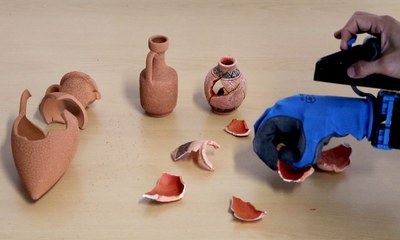
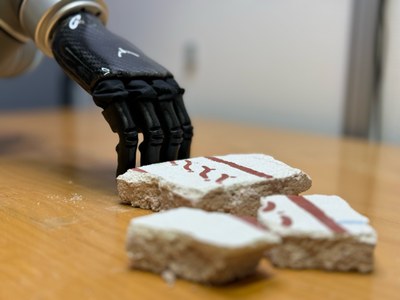
The main goal of the RePAIR project is to develop innovative technology to virtually eliminate one of the most laborious and frustrating steps in archaeological research, namely the physical reconstruction of shattered works of art. In fact, countless vases, amphorae, frescoes and other ancient artifacts, around the world, have not survived intact and have been extracted from excavation sites as large collections of fragments, many of which are damaged, worn out or entirely missing.
We are responsible for the Integration and evaluation of the robotic system and will provide techniques for planning of bi-manual arm motions and planning algorithms to place the fresco pieces at the desired poses.
Links:
Project Members:
Student Assistants:
Related Topics:
Related Publications:
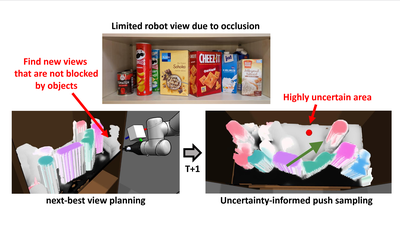
Efficient Manipulation-Enhanced Semantic Mapping With Uncertainty-Informed Action Selection
IEEE/RAS International Conference on Humanoid Robots (Humanoids), 2025
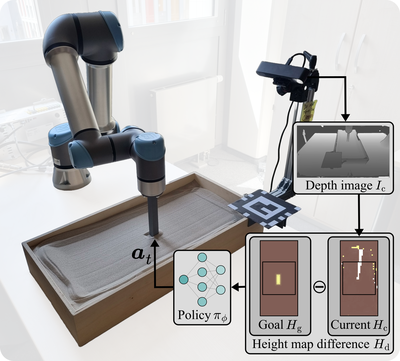
Interactive Shaping of Granular Media Using Reinforcement Learning
IEEE-RAS International Conference on Humanoid Robots (Humanoids), 2025
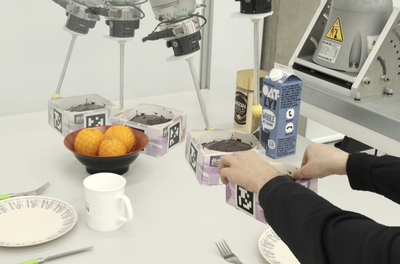
Learning Goal-Directed Object Pushing in Cluttered Scenes with Location-Based Attention
IEEE/RSJ International Conference on Intelligent Robots and Systems (IROS), 2025
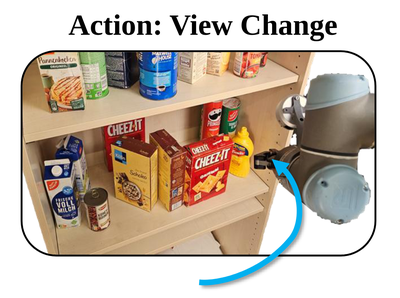
Map Space Belief Prediction for Manipulation-Enhanced Mapping
Robotics: Science and Systems (RSS), 2025
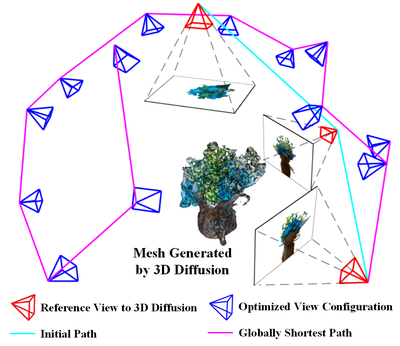
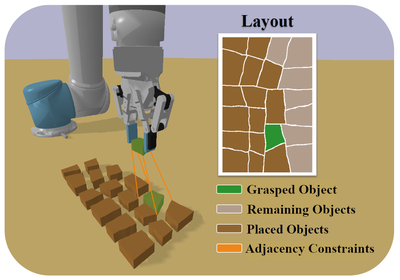
Compact Multi-Object Placement Using Adjacency-Aware Reinforcement Learning
IEEE-RAS International Conference on Humanoid Robots (Humanoids), 2024
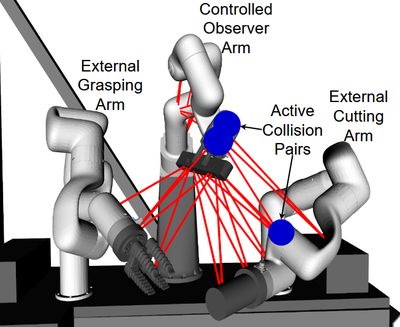
DawnIK: Decentralized Collision-Aware Inverse Kinematics Solver for Heterogeneous Multi-Arm Systems
IEEE-RAS International Conference on Humanoid Robots (Humanoids), 2023
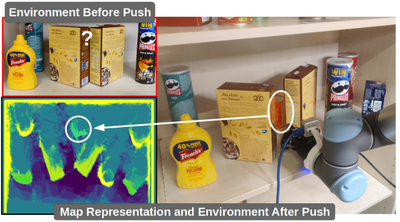
Viewpoint Push Planning for Mapping of Unknown Confined Spaces
IEEE/RSJ International Conference on Intelligent Robots and Systems (IROS), 2023
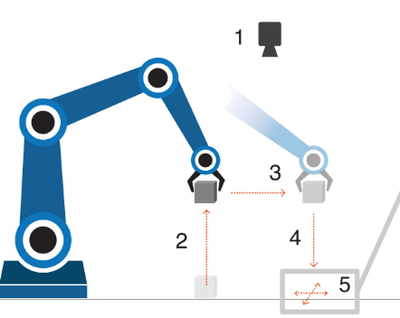
Reactive Correction of Object Placement Errors for Robotic Arrangement Tasks
International Conference on Intelligent Autonomous Systems (IAS-18), 2023
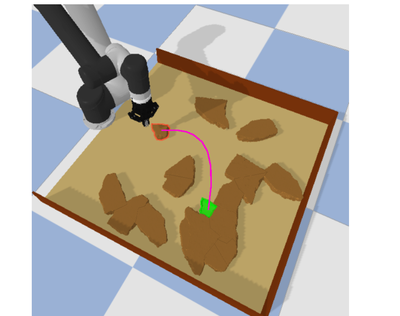
Learning Goal-Directed Non-Prehensile Pushing in Cluttered Scenes
IEEE/RSJ International Conference on Intelligent Robots and Systems (IROS), 2022