
Research Area
Personalized Human-Robot Interaction
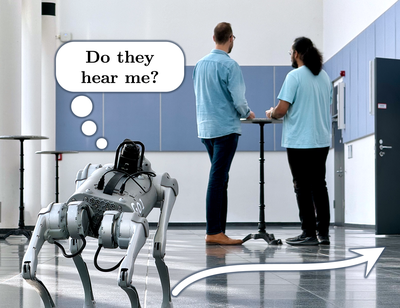
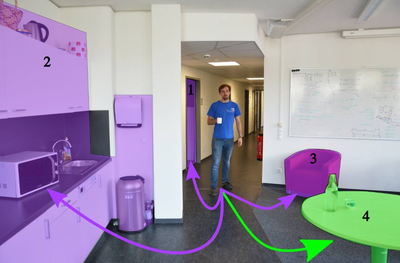
It's important to make sure robots can interact with humans in the best way possible. They need to not only be efficient and safe, but also be intuitive and explainable. One crucial aspect is allowing people to customize and influence a robot's behavior. For example, when robots move around near humans, they should adapt to social rules, context, and most importantly people's preferences. So, how can we easily teach a robot what we want and while making sure it follows important rules like reaching its goal and avoiding collisions?
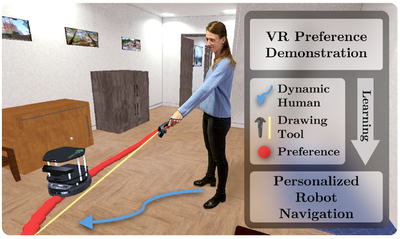
We actively work on learning architectures and feedback interfaces that enable preference-aligned robot behavior. For example, we have developed an immersive virtual reality interface, where the user intuitively demonstrates preferences. From those demonstrations, the robot can learn a personalized navigation controller within a safe computer simulation, kind of like how we learn from trial and error. We could show that the robot controlled by our system made people feel more comfortable when interacting with it.
Associated Researchers:
Related Projects:
Anticipating Human Behavior
This project focuses on creating technology for applications that predict human behavior. It covers a wide scope, including timeframes from milliseconds to hours and various levels of detail, from specific motions to general actions. The aim is to develop a comprehensive framework that doesn't isolate subproblems but integrates all aspects, allowing for accurate anticipation of human behavior, from long-term activity patterns to short-term detailed movements.

PRIVATAR - Privacy-friendly Mobile Avatars for Sick School Children
In order to promote the integration of acutely and chronically ill school children, the use of mobile robots as avatars at school offers a promising approach. Nevertheless, the robots, through their interactions and sensors, can endanger the different privacy dimensions of different people. PRIVATAR therefore aims to provide user-friendly solutions that allow users to better protect their privacy according to their own preferences through novel interactions. This gives them more control over their privacy, which goes far beyond the currently used consent forms.
Related Publications:
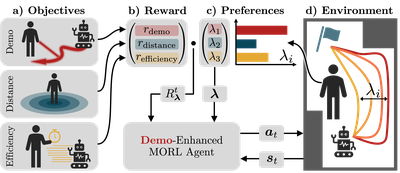
Demonstration-Enhanced Adaptable Multi-Objective Robot Navigation
IEEE/RSJ International Conference on Intelligent Robots and Systems (IROS), 2025
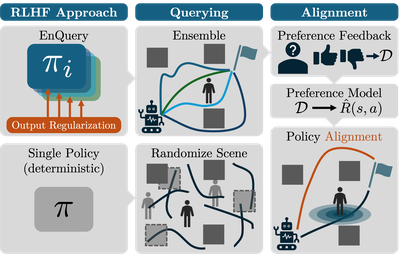
Ensemble Policies for Diverse Query-Generation in Preference Alignment of Robot Navigation
IEEE International on Human & Robot Interactive Communication (RO-MAN), 2024
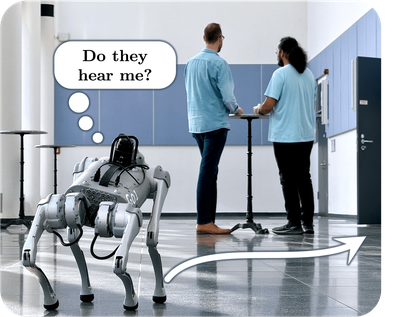
Sound Matters: Auditory Detectability of Mobile Robots
IEEE International Conference on Robot and Human Interactive Communication (RO-MAN), 2024
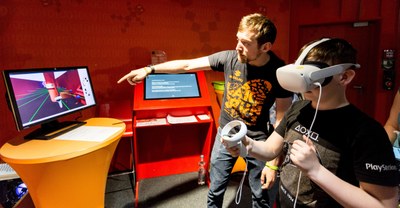
RHINO-VR Experience: Teaching Mobile Robotics Concepts in an Interactive Museum Exhibit
IEEE International on Human & Robot Interactive Communication (RO-MAN), 2024
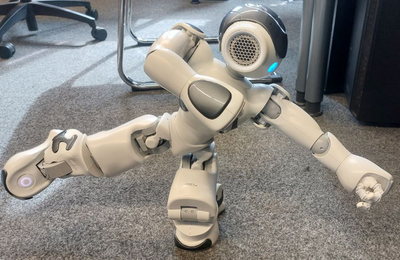
Trust, (Dis)Comfort, and Voice Quality: Anthropomorphism in Verbal Interactions with NAO
HCI International 2024 Posters
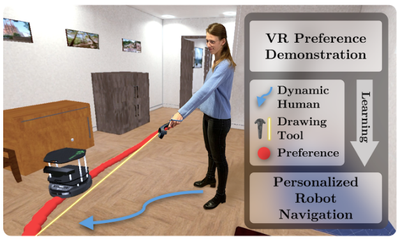
Learning Depth Vision-Based Personalized Robot Navigation From Dynamic Demonstrations in Virtual Reality
IEEE/RSJ International Conference on Intelligent Robots and Systems (IROS), 2023
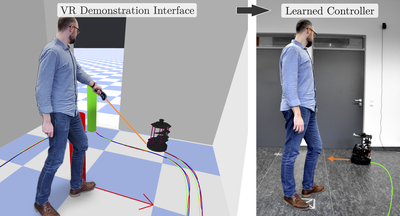
Learning Personalized Human-Aware Robot Navigation Using Virtual Reality Demonstrations from a User Study
IEEE International on Human & Robot Interactive Communication (RO-MAN), 2022
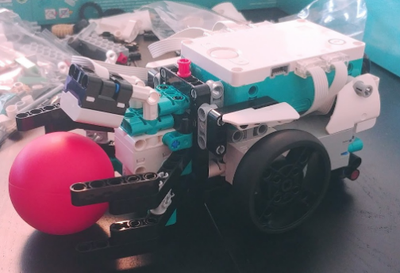
Working with Robots: Design and Evaluation of an introductory Computer Science Teaching Unit with Educational Robots
European Conference on Education (ECE), 2022
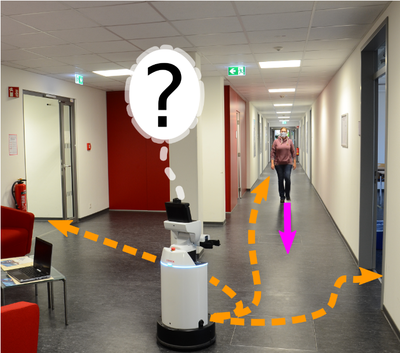
Human-Aware Robot Navigation Based on Learned Cost Values from User Studies
IEEE International Conference on Robot and Human Interactive Communication (RO-MAN), 2021
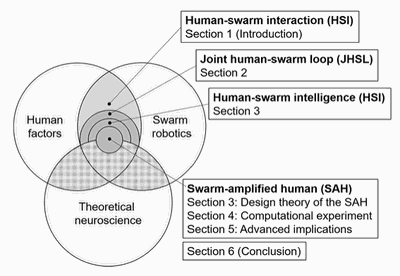
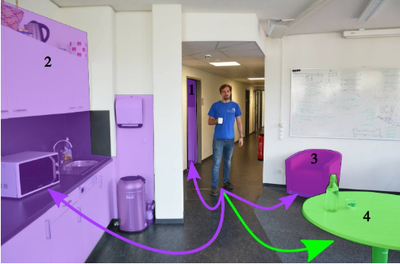
Predicting Human Navigation Goals based on Bayesian Inference and Activity Regions.
Robotics and Autonomous Systems (RAS), 2020
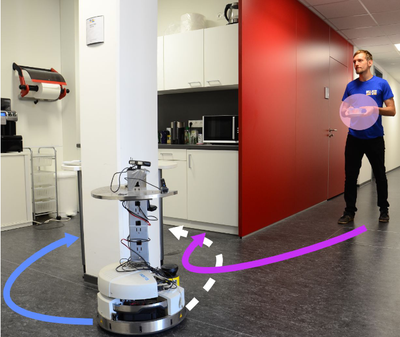
Human-Aware Robot Navigation by Long-Term Movement Prediction
IEEE/RSJ International Conference on Intelligent Robots and Systems (IROS), 2020
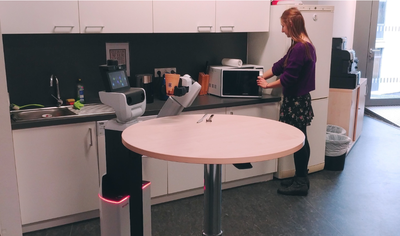
Where Can I Help? Human-Aware Placement of Service Robots
Proceedings of the IEEE Conference on Robot and Human Interactive Communication (RO-MAN), 2020
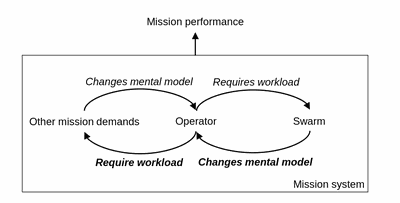
On the Importance of Adaptive Operator Training in Human-Swarm Interaction
Proceedings of the International Conference on Human-Computer Interaction (HCII), 2020
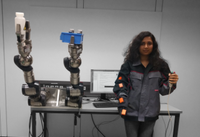
Applying the Popov-Vereshchagin Hybrid Dynamics Solver for Teleoperation under Instantaneous Constraints
Proceedings of the International Conferences on Advanced Robotics (ICAR), 2019
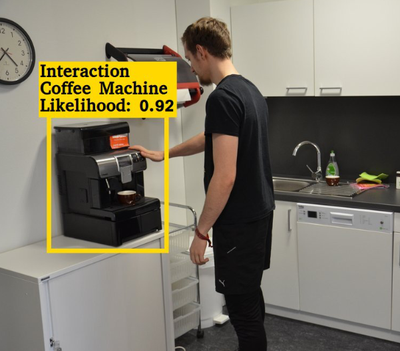
Detection of Generic Human-Object Interactions in Video Streams
Proceedings of the International Conference on Social Robotics (ICSR), 2019
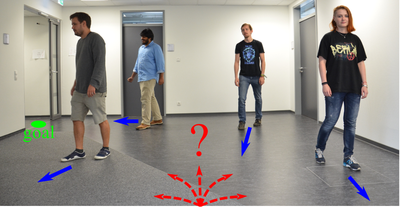
Improving Navigation with the Social Force Model by Learning a Neural Network Controller in Pedestrian Crowds
Proceedings of the European Conference on Mobile Robots (ECMR), 2019
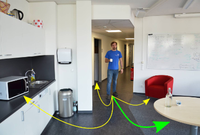
Human Motion Prediction Based on Object Interactions
Proceedings of the European Conference on Mobile Robots (ECMR), 2019
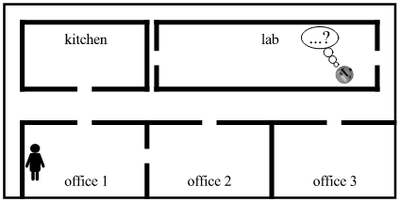

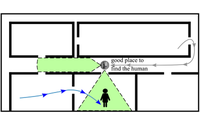
People Finding under Visibility Constraints using Graph-Based Motion Prediction
International Conference on Intelligent Autonomous Systems, 2018